

In spring of 2016, the Mar Menor sea lagoon located in Murcia became a ´green soup´ due to uncontrolled microalgae growth. This event was a breaking news in all regional, national and even European newspapers and, general public noticed what many experts were indicating for years: Mar Menor was dying. But the destruction of this lagoon began approx. five decades ago and, since then, it has suffered a slow but drastic deterioration with the increasing in coastal urbanization, and in recent decades by the transformation of Cartagena’s dry lands into irrigated intensive plant cultures.
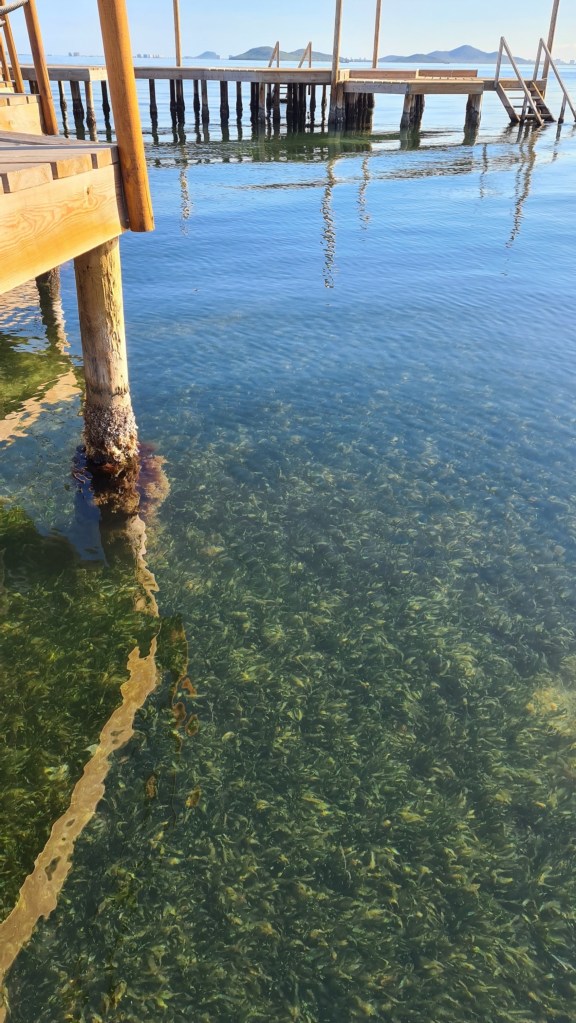
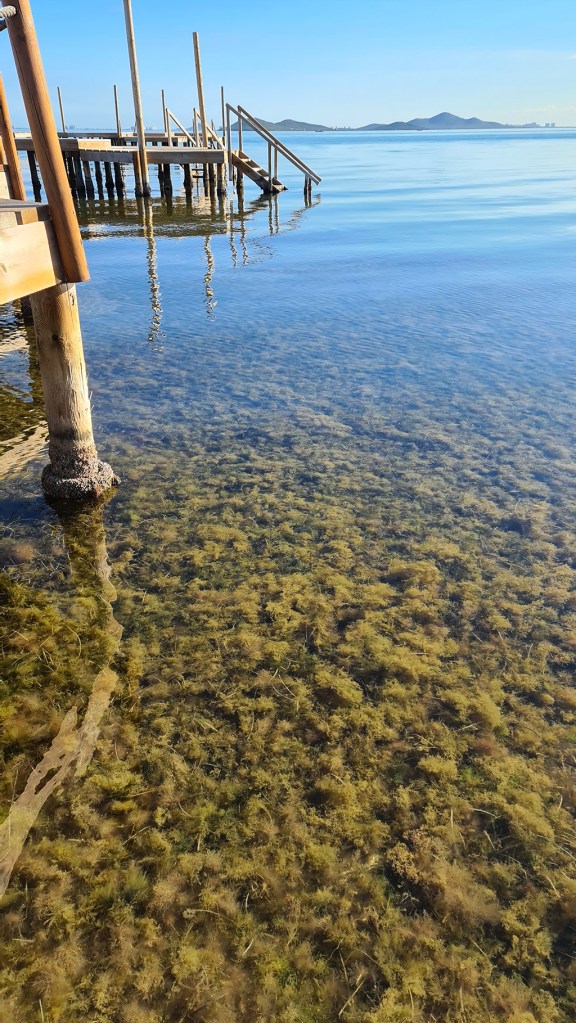
Caulerpa prolifera (hare’s ear) is the algae that is widely colonizing the Mar Menor bottom. Probably, the algae was introduced in the lagoon with the dredging and widening of the Estacio channel in the 1970s, causing an ecosystem alteration, therefore, it is considered an invasive specie. Apparently, its fast colonization was enhanced by the large amounts of nutrients (mainly nitrates and ammonium) released in the lagoon from agriculture, livestock and poorly treated wastewaters.
Recently, a mixture of mucilaginous and filamentous algae called ´ova´ (in Spanish) has increased (Chaetomorpha linum, Cladophora sp) provoking blurring and greening of the surface and lagoon waters. These algae can attach themselves to stones or other algae and get accumulated in shallow areas. Ova proliferations were frequent in the Northern area of Mar Menor in the 1980s, before the sanitation network and urban wastewater treatment plants were established. Nowadays, new outbreaks have appeared due to the draining of irrigation waters from the Cartagena lands and the continuous upwelling from underground layers saturated with water, since the previous dry lands are now irrigated and intensively cultivated.
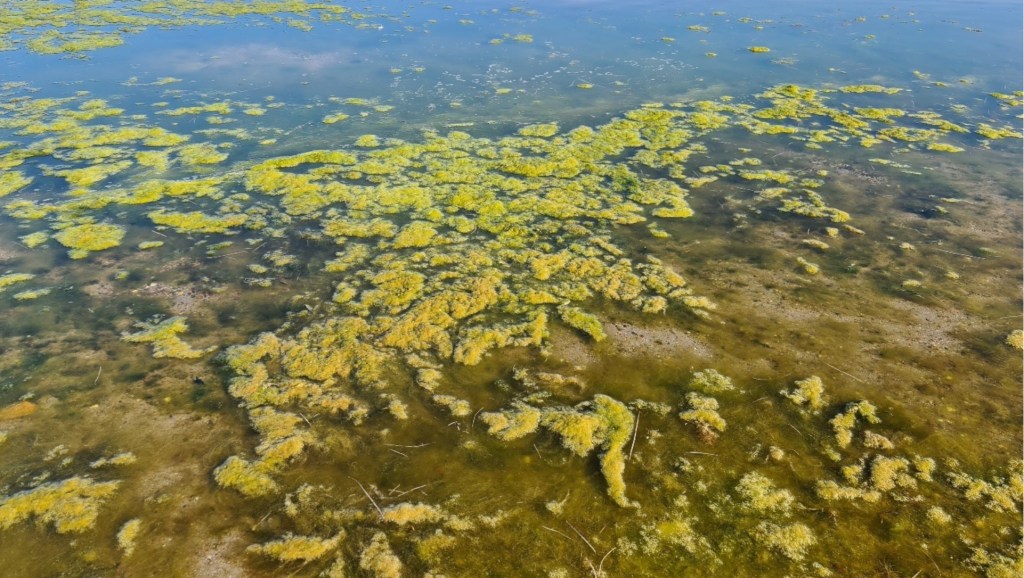
After the ´green soup´ event, the Regional Government had to remove the algae (biomass) with the EU support. Now, they expend large amounts of money for their daily disposal, not only of surface algae but also algal wracks that get stuck at the seashore depending on the winds and storms. These algae are collected by hand and piled up in recycling plants without any further use.
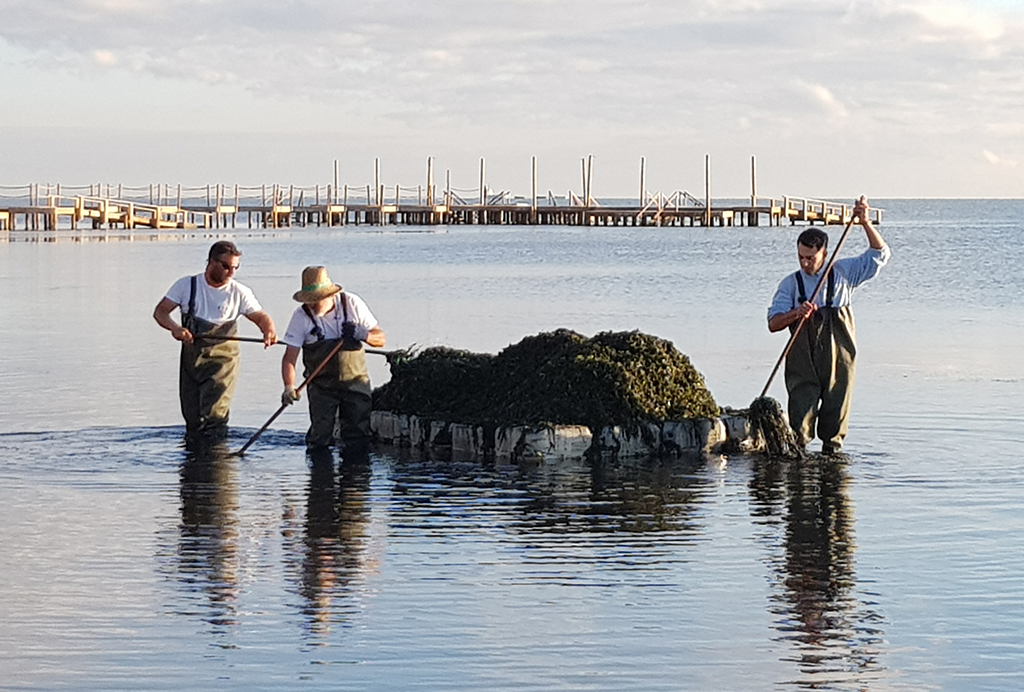
Many journalists indicated that in 2022 approx. 26,000 tons of algae (biomass) were collected while in 2023 there were only 7,000 tons. Some of them pointed out that this decrease was due to the actions that were carried out to avoid nutrient releases into Mar Menor, others indicate that it was due to the lack of rain last year.
 Proyecto Algarikon